


Ethical fine jewelry
In this article
- Introduction
- What is ethical fine jewelry?
- The 4 pillars of ethical fine jewelry
- Why lab-grown diamonds are ethical
- Ethical and recycled gold: a major issue
- Recycling and circular economy
- Certifications and traceability
- The LAUREDI commitment: in practice
- The true cost of traditional jewelry
- Consumer power
- The future of ethical fine jewelry
- Take action
- Frequently asked questions
Ethical Fine Jewelry: When Beauty Meets Responsibility
Who said fashion and ethics can’t go hand in hand? At LAUREDI, we firmly believe that beauty only has meaning when it is created responsibly. That’s why we work exclusively with lab-grown diamonds and 18-carat recycled gold. Let’s dive into the fascinating world of ethical fine jewelry!
What is ethical fine jewelry?
Ethical fine jewelry is an approach that considers social and environmental impact at every stage of creating a piece of jewelry. From sourcing raw materials to the final craftsmanship, every decision is made with care. It’s not simply about creating beautiful objects, but about creating pieces that are both beautiful and responsible.
This approach reflects consumers’ growing awareness of the impact of their purchases. When you choose an ethical piece of jewelry, you invest in a creation that tells a positive story, from start to finish.
The 4 pillars of ethical fine jewelry
Ethical fine jewelry is built on four fundamental pillars that ensure responsible creation:
Responsible sourcing : Materials must be traceable and ethically sourced. This means knowing the origin of every diamond, every gram of gold. At LAUREDI, our blue diamonds, green diamonds, pink diamonds and yellow diamonds are all lab-created, eliminating the risks associated with mining.
Fair working conditions : Everyone involved in creating a piece of jewelry deserves fair pay and a safe working environment. This is non-negotiable. Ethical jewelry rejects exploitation and values artisanal craftsmanship.
Environmental sustainability : The goal is to minimize ecological impact at every stage. Traditional mining leaves deep scars on our planet. By choosing alternatives such as lab-grown diamonds and recycled gold, we drastically reduce our carbon footprint.
Transparency : Clear communication about the origin of materials and manufacturing practices is essential. Consumers have the right to know exactly what they are buying. At LAUREDI, we believe transparency is not a luxury—it is an obligation.
Why lab-grown diamonds are ethical
Lab-grown diamonds represent a revolution in the jewelry industry. Contrary to popular belief, these diamonds are chemically, physically, and optically identical to diamonds mined from the earth. The only difference? Their origin.
The ethical advantages of lab-grown diamonds are considerable. Their production reduces environmental impact by 97% compared with traditional mining. They do not require moving tons of earth, destroying ecosystems, or draining rivers. And above all, they are 100% traceable and guaranteed conflict-free.
At LAUREDI, we have made the exclusive choice of lab-grown diamonds for all our creations. Our deep blue diamonds, our emerald-green diamonds, and our romantic pink diamonds offer vibrant colors impossible to find in nature, while staying true to our ethical values.
Ethical and recycled gold: a major issue
Gold mining is one of the most problematic sectors in the mining industry. To produce a single gold ring, an average of 20 tonnes of ore must be moved. The heavy use of cyanide and mercury in extraction processes contaminates soils and groundwater for decades.
The social impacts are just as concerning. Many gold mines employ workers in dangerous conditions, sometimes for poverty wages. In some regions, gold extraction even finances armed conflicts.
Ethical gold comes from sources that meet strict standards for human rights and environmental protection. Certifications such as Fairmined guarantee that the gold was mined responsibly, with fair pay for miners and environmentally responsible practices.
Our choice at LAUREDI? Recycled 18-carat gold. Every gram of gold we use has already lived a first life. This approach eliminates the need for new mining while offering the same exceptional quality.
Recycling and circular economy
Another powerful approach to ethical fine jewelry is giving existing materials a new life. Gold and gemstones can be reused indefinitely without losing their quality. This practice significantly reduces the environmental footprint of jewelry.
The concept of a circular economy applied to fine jewelry means that each piece can potentially become the raw material for a new creation. An old necklace can be transformed into modern earrings. A ring inherited from your grandmother can become a contemporary pendant.
This approach makes sense on every level. Economically, it provides access to precious materials at a lower cost. Emotionally, it creates a bond between generations and preserves family stories. Environmentally, it drastically reduces the demand for newly mined material.
Do you have old jewelry tucked away in a drawer? Discover how to turn it into modern pieces thanks to our bespoke creation service.
Certifications and traceability
In an industry where promises are plentiful, how can you be sure a piece of jewelry is truly ethical? Certifications and traceability are your strongest allies.
Several organizations offer certifications for ethical jewelry. The Responsible Jewellery Council (RJC) verifies that companies comply with strict ethical, social, and environmental standards throughout their supply chain. Fairmined certifies responsibly mined gold, ensuring decent working conditions and a reduced environmental impact.
For diamonds, gemological certificates such as those from the GIA (Gemological Institute of America) or the IGI (International Gemological Institute) confirm the authenticity and characteristics of the stones. For lab-grown diamonds, these certificates clearly state their origin.
Traceability goes further by making it possible to track a material’s full journey, from its source to your finger. Blockchain technologies are beginning to be used in the industry to create immutable records of a stone’s or metal’s history.
The LAUREDI commitment: in practice
We are proud of our efforts, but we know there is still a long way to go. Here is how we bring our ethical commitment to life every day:
Our diamonds : 100% lab-grown. We work with certified laboratories that use renewable energy in their production process. Each diamond comes with a gemological certificate confirming its lab-grown origin. We do not sell any mined diamonds.
Our gold : Exclusively 18k recycled gold. We work with certified refiners who transform old gold into pure ingots before we shape it. This approach completely eliminates the need for new mining for our creations.
Our craftsmanship : Our jewelry is designed in Paris and made by skilled artisan jewelers. We favor full transparency in our manufacturing processes. Each piece in our Faubourg 1925 collection and our Loop collection is carefully designed.
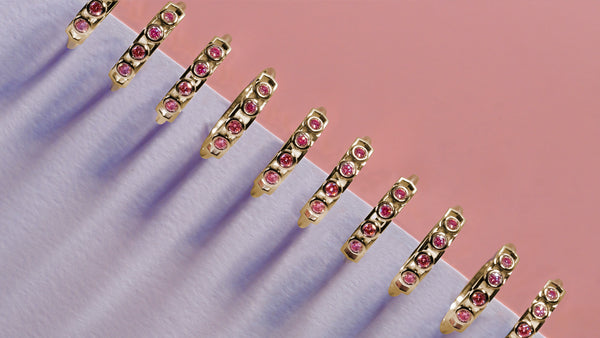
Faubourg 1925
Our Art Deco collection inspired by the Roaring Twenties. Geometric, elegant pieces, designed in Paris, that celebrate lab-grown diamonds.
Discover Faubourg 1925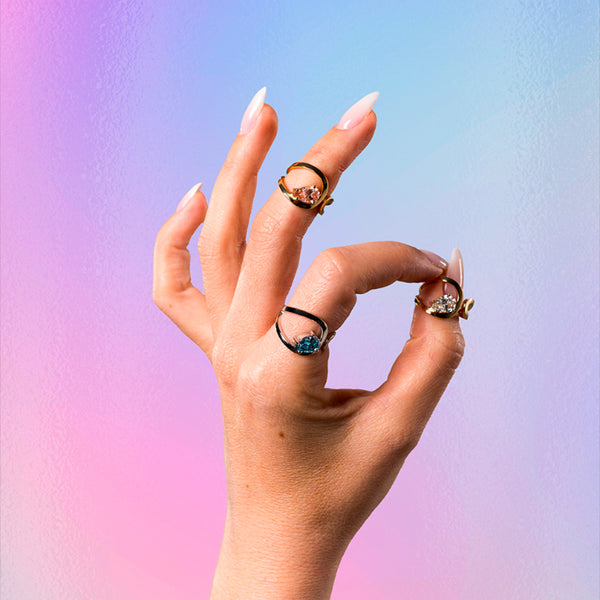
Loop
Modern, timeless creations. Our Loop collection combines minimalism and sophistication, featuring colored diamonds set in 18k recycled gold.
Discover LoopOur carbon impact : We are actively working to reduce our environmental footprint. Our packaging is recyclable, and we prioritize consolidated shipments to minimize transport. We offset unavoidable emissions through reforestation programs.
Each LAUREDI jewel represents a step toward a more ethical future. Whether it’s a ring, earrings, a necklace, or a bracelet, you can wear our creations knowing exactly where they come from and how they were made.


The true cost of traditional jewelry
When you buy a traditional piece of jewelry, the price you pay does not always reflect the true cost of its production. Negative externalities are not accounted for on the tag.
The environmental costs are staggering. Extracting a single carat of diamond requires moving around 250 tonnes of earth. Mines create gigantic craters that permanently alter landscapes. Intensive water use dries out entire regions. The chemicals used to process ore contaminate soils and groundwater for generations.
The social costs are just as severe. In certain diamond-producing regions, working conditions verge on modern-day slavery. Local communities are often displaced without fair compensation. Mining revenues sometimes fuel armed conflicts, giving rise to what are known as “blood diamonds”.
Health costs affect mine workers most of all. Exposure to mineral dust causes lung disease. Accidents in artisanal mines are frequent and often fatal. The use of mercury in gold extraction poisons miners and their families.
By choosing ethical fine jewelry, you refuse to take part in this system. You vote for a model where the true cost of production is transparent and where negative externalities are minimized or eliminated.
Consumer power
By choosing ethical jewelry, you become an agent of change. Every purchase is a vote for a more responsible industry. You decide what kind of world you want to support with your money.
The fine jewelry market is evolving because consumers are demanding better. Fifteen years ago, finding ethical jewelry was an uphill battle. Today, more and more brands are committing to this path because the demand is there.
But beware of greenwashing. Some brands use terms like "eco-friendly" or "sustainable" without any real substance behind them. Ask specific questions. Where do the diamonds come from? Is the gold recycled or Fairmined-certified? What are the manufacturing conditions? A truly ethical brand will be transparent and happy to share this information.
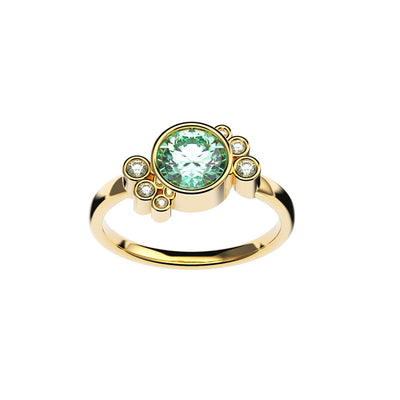
By choosing pieces such as our Loop Pear ring in a lab-grown diamond or our Faubourg 1925 collection in recycled gold, you support not only elegant design, but also tangible ethical practices. Every creation you wear tells a positive story.
The future of ethical fine jewelry
We envision a future where transparency is the norm, where every piece of jewelry tells a positive story from its creation to its sale. Emerging technologies are making this vision increasingly realistic.
Blockchain, for example, already makes it possible to trace every step in the journey of a diamond or a gold bar. Imagine being able to scan a QR code on your jewelry and instantly discover the exact origin of each material, the artisans who worked on it, and the environmental impact of its production. This full transparency will soon be within everyone’s reach.
Lab-grown diamonds continue to advance. New generations of reactors are becoming increasingly energy-efficient. Some laboratories already operate entirely on solar power. Colored diamonds are becoming more and more accessible, offering shades impossible to find in nature.
The circular economy will continue to grow. Jewelry take-back and recycling programs for vintage pieces will become widespread. Consumers will increasingly embrace the idea that the most precious gold is the gold that already exists—not the gold that still needs to be mined.
Personalization is set to grow. Consumers want unique pieces that tell their story. Our bespoke creation service meets this need by enabling everyone to design their ideal jewel while honoring our ethical values.
Take action
Choosing an ethical jewel is choosing the future. It is a statement that luxury and responsibility are not incompatible, but inseparable. It is proof that you can wear magnificent creations without compromising your values.
At LAUREDI, we believe every jewel should be a source of pride at every level. Pride in its beauty, of course, but also pride in its story and its positive impact on the world.
Explore our collection of ethical lab-grown diamond rings, discover our creations featuring blue diamonds, green diamonds, pink diamonds, and yellow diamonds, or create your one-of-a-kind jewel with the help of our experts.
Do you have questions about our ethical approach or our materials? Our team is here to answer you with complete transparency. Because ethical fine jewelry begins with honesty and dialogue.
Frequently asked questions
What is an ethical lab-grown diamond?
A lab-grown diamond is a stone created in a laboratory that has exactly the same properties as a natural diamond. It is ethical because its production avoids mining, reduces environmental impact by 97%, and ensures complete traceability with no risk of conflict financing. At LAUREDI, all our diamonds are lab-grown and come with gemological certificates attesting to their quality and origin.
How can you verify that a jewel is truly ethical?
To verify a jewel’s ethical credentials, ask for full traceability of the materials. Lab-grown diamonds should come with certificates stating their lab-grown origin. Gold should be recycled or Fairmined-certified. Look for certifications such as the Responsible Jewellery Council. A truly ethical brand will be transparent about its sourcing and manufacturing methods. Beware of greenwashing, and don’t hesitate to ask specific questions.
Is ethical jewelry more expensive?
Contrary to popular belief, ethical jewelry is not necessarily more expensive. Lab-grown diamonds generally cost 30 to 40% less than their natural equivalents of the same quality. Recycled gold costs about the same as newly mined gold. What you pay reflects the true value of the piece, without indirectly subsidizing environmental destruction or human exploitation. At LAUREDI, our collections offer outstanding value in terms of quality, price, and ethics.
What is the difference between a lab-grown diamond and a natural diamond?
Chemically, physically, and optically, there is no difference. Both are crystallized pure carbon. A gemmologist can only tell them apart with specialized equipment that looks for growth markers. The only real difference is origin: one formed underground over millions of years, the other was created in a laboratory in a few weeks. Lab-grown diamonds offer the same brilliance, hardness, and durability as natural diamonds.
Why choose recycled gold rather than newly mined gold?
Recycled gold eliminates the need for mining, one of the most environmentally destructive industries. To produce a gold ring, around 20 tons of ore must be moved and toxic chemicals used. Gold can be recycled indefinitely without losing any of its qualities. By choosing 18-carat recycled gold, you get the same purity and beauty while respecting the planet.
Can I transform my old jewelry into modern ethical pieces?
Absolutely! Transforming vintage jewelry is one of the most ethical approaches in fine jewelry. You can recycle your old jewelry to create contemporary pieces that match your current style. Our bespoke design service lets you work with our experts to give new life to your family jewelry while preserving its history and memories.
Are lab-grown colored diamonds as ethical as white diamonds?
Yes, all lab-grown diamonds are ethical, regardless of their color. Blue, green, pink, and yellow lab-grown diamonds even offer an added advantage: natural fancy-color diamonds are extremely rare and therefore often linked to even more intensive mining. Lab-grown versions deliver vivid, intense hues impossible to find in nature, with the same reduced environmental impact.
How does LAUREDI ensure the ethical standards of its jewelry?
At LAUREDI, we follow several principles: 100% lab-grown diamonds with gemmological certificates, exclusive use of 18-carat recycled gold sourced from certified refiners, jewelry designed in Paris and made by skilled artisans, complete transparency about our supply sources, and a commitment to continuously reducing our environmental impact. We never compromise on ethics and are always happy to answer your questions about our practices.


