


Transforming and recycling old jewelry (Upcycling)
Contents
Have you inherited a wedding band that no longer matches your style? Do you own broken or outdated pieces of jewelry sitting at the bottom of a drawer? Rather than letting them gather dust, there is a creative solution: melt down a ring to make another one. This practice, also known as jewelry upcycling or jewelry transformation, is truly gaining momentum. It gives your gold pieces a second life while creating a modern jewel that truly reflects you.
Jewelry transformation is a fully fledged creative process. It’s an opportunity to collaborate with a master jeweler to design a unique piece that carries your story while expressing your current style. Whether you want to transform a wedding band into a contemporary ring, update an inherited necklace, or reinvent a family jewel, this guide explains the steps of this creative journey and the possibilities offered by gold remelting.
Why transform your old jewelry?
The decision to transform old gold jewelry is driven by several deep motivations, far beyond simply recycling the material.
Create a piece of jewelry that truly reflects you : A transformed jewel is not simple recycling. It is a creation in its own right, designed for you, with you. You work alongside a master jeweler to design a one-of-a-kind piece that expresses your personality, your style, your story. It’s an opportunity to wear a truly personal jewel, found nowhere else. Creating a ring from your old gold means imagining a design that suits you, choosing every detail, and watching an exceptional piece come to life before your eyes.
Preserve sentimental value : Transforming doesn’t mean forgetting. On the contrary, transformation allows you to carry on the family story by creating a new piece that retains the essence of the original while fitting your life today. A wedding band inherited from your grandparents can thus become a modern engagement ring that continues the family tradition in a way that speaks to you.
An eco-friendly, responsible approach : Jewelry recycling is part of a sustainable mindset. By reusing existing gold, you avoid mining, a particularly polluting process. This jewelry transformation is a tangible way to reduce your environmental footprint while enjoying an exceptional-quality piece in 18-carat gold.
Bringing neglected pieces back to life : Tastes evolve over time. A piece of jewelry you loved twenty years ago may feel outdated today. Transformation lets you enjoy a contemporary design that suits your current style, while preserving the precious material and the memories attached to it.
How does the transformation work? (The Steps)
Transforming an old piece of jewelry into a new creation involves several stages that combine technical expertise and creativity. Understanding this process helps you better appreciate the craftsmanship required to bring your project to life.
What transformations are possible?
The transformation possibilities are virtually endless. Here are the projects most frequently carried out, showcasing the creative range of this approach.
Turning a wedding band into a ring
This transformation is particularly common after a divorce or as part of an inheritance. Rather than keeping a wedding band that evokes a closed chapter, you can turn a wedding band into a ring that symbolizes a fresh start. The options are numerous: a contemporary signet ring engraved with your initials, a solitaire ring set with a diamond that captures the light, a bold cocktail ring that expresses your personality, or a sleek band ring designed for everyday wear.
For those who wish to take the next step, transforming a former wedding band into an engagement ring for a fresh start is a powerful symbolic gesture. Discover how to propose with a history-rich jewel reimagined. To make sure you choose the right size from the start, consult our guide on how to find your ring size.
Give new life to a necklace
A gold necklace or chain—even if broken or out of style—can be transformed into an entirely different piece. If you no longer wear necklaces or prefer rings, this transformation is ideal. The weight of a chain can give rise to a bold signet ring, a wide band that dresses the hand, or even several fine rings you can wear together or separately. An antique pendant can be redesigned into a contemporary ring, with its stones naturally finding their place in the new design.
Into a jewel from our collections
Do you love a piece from the Lauredi collection but want to use your family gold? That’s absolutely possible. Bring in your old pieces and we will transform them to recreate the jewel of your choice from our collections. Would you like a Loop ring, a Faubourg 1925 piece, or any other model from our catalog? We use your gold to craft that piece, combining Lauredi craftsmanship with the story of your family jewelry.
This option is especially popular when you’ve already found the design that suits you perfectly in our collection, but you’d like to incorporate the sentimental value of your family gold. The result is an authentic Lauredi jewel, created especially for you using the material that carries your story.
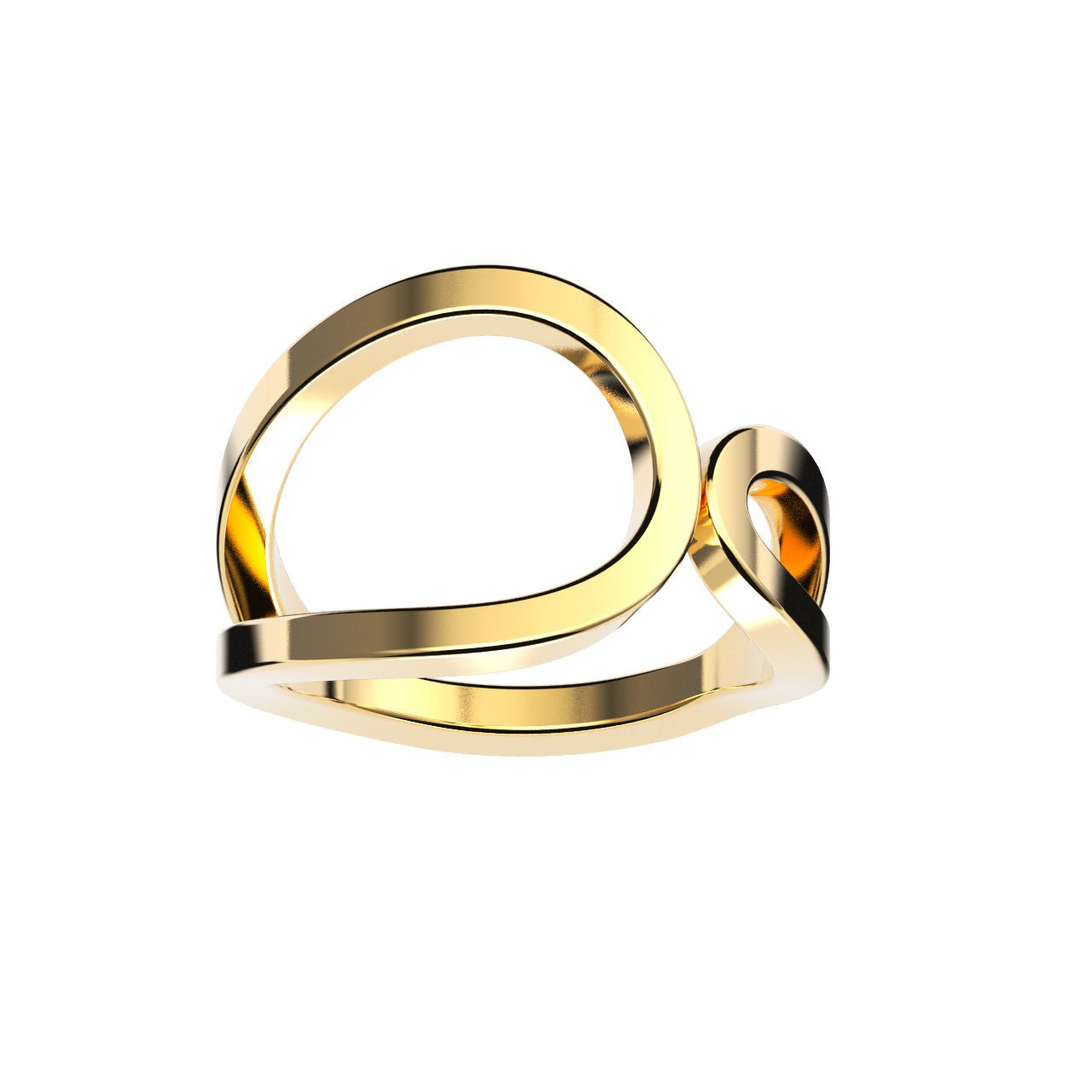
Loop Gold Ring
18k gold, minimalist design
The timeless classic
Clean, modern design—perfect for everyday wear. A signature piece that stands the test of generations.
Services : Complimentary resizing, 30-day returns, 2-year warranty
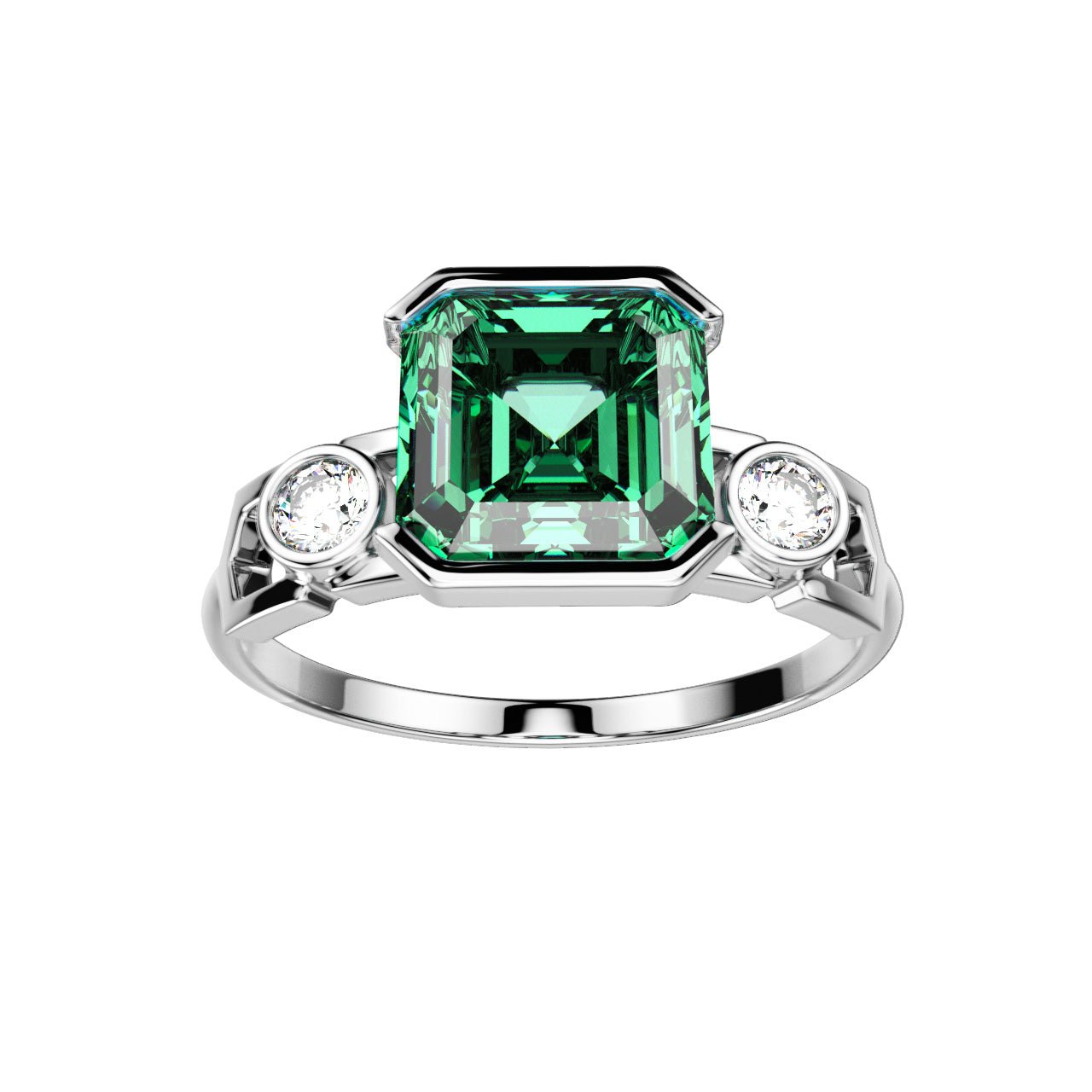
Faubourg 1925 Asscher Green Diamond Ring
18k gold, 1.75ct Asscher green diamond
Art Deco architecture
Pure geometry and a certified fancy-color diamond. An exceptional piece that blends heritage and modernity.
Services : Complimentary resizing, 30-day returns, 2-year warranty
Understanding the transformation process
Jewelry transformation involves several aspects that are important to understand in order to fully grasp your project.
Artisanal craftsmanship : Transforming a jewel is not a simple mechanical operation. It is a craft that calls on advanced technical skills and a creative sensibility. The jeweller must master metal casting, understand the properties of each alloy, know how to create designs that combine aesthetics and durability, and have the experience needed to bring your vision to life. This expertise is reflected in every stage of the process, from the initial consultation to the final finishing touches.
Material loss during refining : It is important to understand that a slight material loss is unavoidable during the transformation. During gold refining, around 5 to 10% of the initial weight is lost. This loss is due to the removal of impurities present in your vintage jewels and to the metal’s natural oxidation during melting. This is a normal process that ensures your new jewel is crafted in perfectly pure gold of the highest quality.
Adding material if needed : Depending on the design you envision and the amount of gold available, it may be necessary to add new gold to complete your project. For example, if you have a slim wedding band and wish to create a substantial signet ring, additional gold will be required. Likewise, if you want to change the colour of the gold (from yellow gold to white gold or rose gold), specific alloys will need to be added to achieve the desired shade.
Stones: reusing or sourcing : If your vintage jewels feature precious stones in good condition, they can be reintegrated into your new creation, enriching the project’s sentimental value. However, you may well wish to add new stones to complete your design or create contrast. At Lauredi, we offer a selection of certified lab-grown diamonds—exceptional-quality stones that are ethical and traceable—which will enhance your creation.
Transformation at Lauredi
At Lauredi, we view every transformation as a unique creative journey. Our expertise in bespoke 18-carat gold jewellery enables us to transform your vintage jewels into contemporary pieces that perfectly reflect your vision.
Our creative approach :
- Personalised consultation : We begin with an in-depth consultation, online or in boutique, to understand your story, your wishes, and your style. This is the time to share your inspirations and discover what is technically possible.
- Bespoke design : We create sketches and then a realistic 3D model of your future piece. This visualisation allows you to see your jewel precisely before it is made and to refine every detail until the design perfectly matches your vision.
- Artisanal craftsmanship : Once the design is approved, our artisans handcraft your jewelry in our workshop using the lost-wax casting technique. Every step is carried out with the utmost care, in keeping with fine jewelry traditions.
- Warranty and aftercare : You receive your jewelry with a certificate of authenticity and benefit from our 2-year warranty. We remain at your disposal for any adjustment or care advice.
What sets Lauredi apart :
- Exclusive expertise in 18-carat gold, the only fineness we work with to ensure exceptional quality and durability
- Certified, ethical, traceable lab-grown diamonds to enhance your creations
- French artisanal craftsmanship that carries on the traditions of fine jewelry
- Personalized guidance at every stage of your project
- The ability to preview your jewelry in realistic 3D before production
Explore all the possibilities of bespoke creation and book an appointment to begin your transformation project.
FAQ on jewelry transformation
Can I mix yellow gold and white gold?
Yes, that’s entirely possible. During the refining process, all gold is returned to its pure 24-carat form, regardless of its original color. Yellow gold and white gold both contain pure gold; only the added metals differ (copper and silver for yellow, palladium or nickel for white). Refining removes all these alloy metals to recover pure gold. You therefore start again from a neutral 24-carat base, and then the jeweler creates a new 18-carat alloy in the color you want (yellow, white, or rose) by adding the appropriate metals.
Can my diamonds be reused in the new ring?
Absolutely. Diamonds and other precious stones are carefully removed from their settings before the gold is melted down and can be incorporated into your new piece of jewelry. The jeweler assesses the condition of each stone and advises you on the best way to showcase them in the new design. It’s an excellent way to preserve the sentimental value of your vintage jewelry while creating a distinctly modern piece.
How much gold is needed to make a ring?
It depends on the type of ring and its size. For a classic slim wedding band, allow around 3 to 5 grams of 18-carat gold. For a wider ring or a signet ring, you’ll need between 8 and 15 grams. A solitaire ring with a single diamond generally requires 3 to 6 grams depending on the setting. The jeweler will calculate the exact amount needed based on your project and will let you know if you need to add extra gold to achieve your design.
How long does it take to transform a piece of jewelry?
The timeframe varies depending on the complexity of the project. For a relatively simple creation, allow 3 to 4 weeks after approval of the final design. For more elaborate projects requiring complex techniques or the sourcing of specific stones, the timeframe may extend to 6 to 8 weeks. This time ensures exceptional artisanal craftsmanship, with all necessary checks at every stage of the creative process.
What happens if I don’t want to reuse my original stones?
That is completely understandable. Some gemstones may be damaged, may not suit your new design, or simply may not appeal to you anymore. In that case, you can choose new stones for your creation. At Lauredi, we offer a selection of certified lab-grown diamonds that provide exceptional quality and full traceability. Your original stones can be kept or resold, according to your wishes.
Can 9-carat gold jewelry be transformed into 18-carat gold jewelry?
Yes, that is entirely possible. 9-carat gold contains 37.5% pure gold, while 18-carat gold contains 75%. The refining process returns your 9-carat gold to its pure 24-carat form by removing all alloy metals. However, the amount of pure gold obtained will naturally be lower than if you had started with 18-carat gold. For example, 10 grams of 9-carat gold will yield about 3.75 grams of pure gold after refining, whereas 10 grams of 18-carat gold will yield 7.5 grams. Your gold will therefore contribute less to the final piece, and it will likely be necessary to add new gold to complete your project. At Lauredi, we work exclusively with 18-carat gold to ensure the excellence of every creation.
My vintage piece has strong sentimental value—will I lose that by transforming it?
On the contrary, the redesign can even enhance that sentimental value. Rather than leaving a piece of jewelry at the bottom of a drawer, you give it a new life that allows you to wear it every day. The gold from your grandparents’ wedding band becomes a ring you wear daily, keeping their memory alive in a modern, meaningful way. Many of our clients tell us that the redesign helped them reclaim their family history while creating their own story.
What happens to the small gold pieces I didn’t use?
If, after your project, there is surplus gold remaining, several options are available to you. You may keep it for a future redesign project, use it to create a small complementary piece (matching earrings, a simple pendant), or simply set it aside for later. At Lauredi, we always inform you precisely of the amount of gold used and any potential surplus, with complete transparency.


